
U.S. Liquidation Inventory: Smart Way for Canadian Businesses to Increase Profit
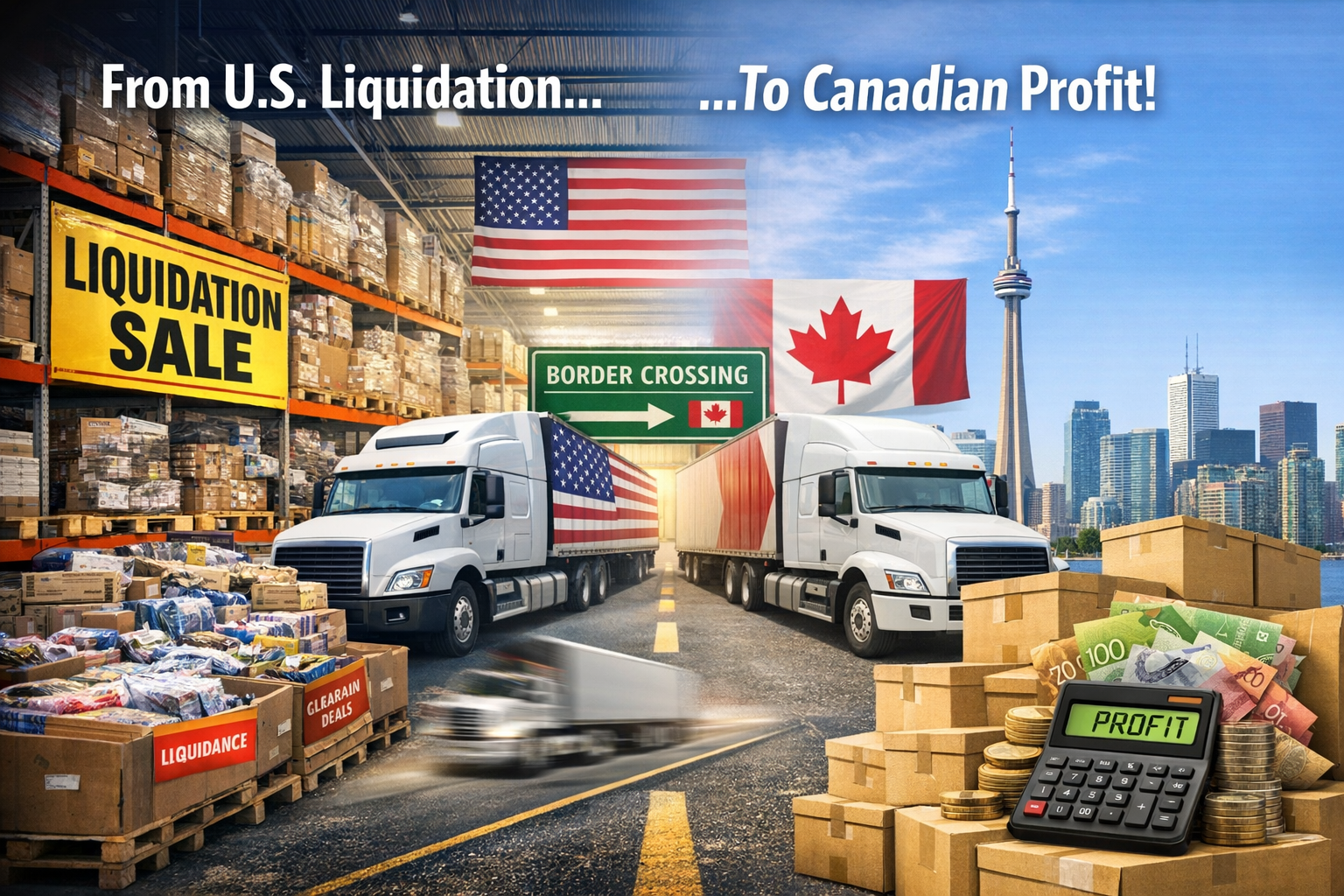
U.S. liquidation inventory is a sourcing strategy widely used by Canadian businesses to purchase discounted goods in the United States and ship them to Canada for resale. This approach allows resellers, discount stores, and wholesalers to access lower-cost products and improve profit margins compared to buying domestically.
What Is U.S. Liquidation Inventory?
U.S. liquidation inventory refers to surplus goods sold below wholesale pricing due to excess stock, customer returns, discontinued items, or seasonal changes from major American retailers.
Common examples include:
- Customer returns from Amazon, Walmart, Target, and Costco
- Overstock and excess inventory from large retailers
- Shelf pulls caused by packaging or model updates
- End-of-season or discontinued merchandise
For many Canadian sellers, this type of inventory has become a core sourcing channel.
Why Canadian Businesses Buy Liquidation Inventory from the U.S.
Canadian businesses turn to U.S. liquidation inventory because the American retail market offers better scale, pricing, and consistency than local liquidation sources.
Higher Profit Margin Potential
Because U.S.-sourced liquidation goods are often priced well below traditional wholesale rates, Canadian buyers can maintain healthy margins even after accounting for shipping, customs clearance, duties, and taxes.
Lower Barrier to Entry
Starting a resale or liquidation business does not require manufacturing or private labeling. Many sellers begin with a single pallet of U.S. liquidation stock to test demand before expanding.
Scalable and Repeatable Supply
Once a product category performs well, buyers can repeatedly source similar U.S. liquidation goods, creating a predictable and scalable resale model.
Why Buy Liquidation Goods from the U.S. Instead of Canada?
Larger Supply and Broader Variety
The U.S. retail market generates significantly more excess inventory and customer returns than Canada, resulting in a wider range of liquidation pallets and truckload opportunities.
Better Pricing Due to Market Scale
Even after including U.S. to Canada transportation costs, the landed cost of American liquidation goods is often lower than purchasing comparable inventory within Canada.
Access to Well-Known Retail Brands
Buying liquidation goods from the United States allows Canadian sellers to offer recognizable brands that typically have stronger resale demand in the Canadian market.
How U.S. to Canada Liquidation Shipping Affects Profitability
Shipping and logistics are critical cost factors in any liquidation business. Liquidation shipments are often palletized, oversized, and non-standard.
Key logistics considerations include:
- Pickup from U.S. liquidation warehouses
- Pallet consolidation and freight optimization
- Cross-border transportation and customs clearance
- Proper HS code classification and documentation
- Final-mile delivery within Canada
According to U.S. Customs and Border Protection, accurate documentation is essential when importing commercial goods across borders.
Common Mistakes When Buying U.S. Liquidation Inventory
Canadian buyers often lose money due to avoidable errors:
- Underestimating cross-border shipping costs
- Submitting incorrect commercial invoices
- Using the wrong HS codes
- Ignoring pallet size and weight restrictions
- Failing to calculate duties and taxes in advance
Working with an experienced U.S. to Canada logistics provider can significantly reduce these risks.
Why Logistics Is Key to a Successful Liquidation Business
Sourcing discounted goods is only the first step. Profitability depends on how efficiently inventory moves across the border.
Reliable cross-border logistics help ensure:
- Lower landed costs
- Faster inventory turnover
- Predictable delivery timelines
- Improved cash flow management
Learn more about our U.S. to Canada cross-border shipping solutions for liquidation inventory.
Final Thought
For Canadian businesses, U.S. liquidation inventory is not a shortcut—it is a strategic sourcing advantage.
By leveraging American liquidation markets and pairing them with efficient logistics, sellers can access better pricing, broader product selection, and stronger long-term resale margins.
In addition, buying discounted goods from the U.S. allows Canadian resellers to scale gradually. Businesses can start with smaller test shipments, analyze local demand, and increase order volumes over time. As operations grow, sellers can improve freight efficiency, negotiate better logistics rates, and build a more stable and sustainable resale operation.